Flarial Client is one of the most advanced Minecraft PE/Bedrock modded clients, aimed at boosting FPS, adding a clean PvP HUD, and giving you Java-like controls while staying fully client-side and legit for most servers. This guide focuses on using Flarial Client with Minecraft PE 1.21.132 in Tier 1 regions (US/UK/EU) and what you should know about performance, safety, and setup.
- Optimized for latest Minecraft Bedrock 1.21+ builds, including 1.21.111 and newer micro-updates.
- FPS boost tools, Motion Blur, and visual tweaks tuned for mobile and low-end PCs.
- HUD modules: Armor HUD, FPS counter, CPS, Keystrokes, Reach display, Zoom, and more.
- Full customization via modules GUI, configs, and Java-style hotkeys.
- Launcher auto-detects your game build and injects the correct Flarial version.
What is Flarial Client for Minecraft PE 1.21.132?
Flarial Client is a modded Bedrock/MCPE client for Windows and mobile that adds performance tweaks and an advanced HUD layer on top of the vanilla game. It’s widely used in the PvP community as a “legit” client because it focuses on visuals, info overlays, and QoL features, not blatant cheats.
While official documentation and popular sites currently list 1.21.111 as the latest fully confirmed target version, the Flarial launcher is designed to auto-detect your Minecraft version and inject a compatible build for multiple Bedrock updates, including later 1.21 patches. For 1.21.132, you typically:
- Use the latest Flarial Launcher build.
- Let it auto-detect your installed Bedrock/PE version.
- Fall back to the closest supported 1.21.x configuration (e.g., 1.21.111) if 1.21.132 is not explicitly listed yet.
Because Flarial uses a version-aware launcher and can inject different DLLs/configs per build, it is often usable on new micro-updates shortly after release, even before every site updates their labels.
Core Features You Get on 1.21.x (Including 1.21.132)
Most of Flarial’s functionality is version-agnostic across the 1.21 line, so if it runs on your 1.21.132 install, you can expect these key modules.
Performance & Visuals
- FPS Boost: Rendering optimizations and toggles reduce unnecessary visual clutter and help stabilize frame rate on low-end phones and laptops.
- Motion Blur: Smooths movement and can make lower FPS feel more fluid in PvP.
- Block Outline & Break Progress tweaks: Clearer visual feedback for bridging, clutching, and W-tapping.
HUD & PvP Information
- Armor HUD: Shows your armor durability and status on-screen.
- FPS & CPS counters: Real-time performance and click tracking for fine-tuning sensitivity and debounce.
- Keystrokes: Displays W/A/S/D and mouse/trigger presses, popular for PvP and content creation.
- Reach & Hit Indicators: Visual aids to understand your effective hit distance and fight rhythm.
- Zoom (C key by default): Java-style OptiFine-like zoom for clutching, scouting, and aiming.
Quality-of-Life Modules
- Java Hotkeys: Inventory hotkeys and Java-like control mappings for Bedrock.
- Fast Inventory: Faster access to inventory slots and better UI flow.
- Proximity-style features (e.g., mumbo link): Experimental communication enhancements inside the client’s ecosystem.
- Fun mode / Deepfry: Visual meme filters for casual play sessions.
How to Use Flarial Client with Minecraft PE 1.21.132
The exact UI can change between launcher versions, but the overall flow is consistent across 1.21. The steps below describe the typical process for Windows and Android-based PE/Bedrock setups.
1. Get the Official Flarial Launcher
- Go to the official Flarial GitHub or official community sources, not random mirrors.
- Download the latest launcher build that mentions support for Bedrock 1.21.x.
- Install or extract it according to the instructions provided on their GitHub page.
Third‑party download sites like 9Minecraft list the client for 1.21.111, which is close enough that the same core client is used for later 1.21.x updates, but GitHub remains the authoritative source for the newest launcher and patches.
2. Let the Launcher Detect 1.21.132
- Open the Flarial Launcher. It will scan for installed Minecraft Bedrock/PE and detect the version.
- As shown in tutorials, the launcher can inject Flarial into “literally any version you want” by selecting the appropriate configuration.
- If the UI shows your build as 1.21.132 or a nearby GDK code (e.g., 1.21.12x), select it. If not, pick the closest supported 1.21.x profile.
Some tutorials highlight that Flarial and its launcher have been updated to new GDK-based builds, functioning similarly to a version downgrader/selector when needed.
3. Launch Minecraft with Flarial Injected
- Click the Launch button (often red in older builds) to open Minecraft with Flarial pre-injected.
- You should see the Flarial overlay or logo when the game starts, confirming injection.
- Enter a world or server; Flarial’s HUD modules can then be toggled in-game via its menu or hotkey.
4. Configure Modules & HUD
Flarial’s strength is its highly configurable module system and configs.
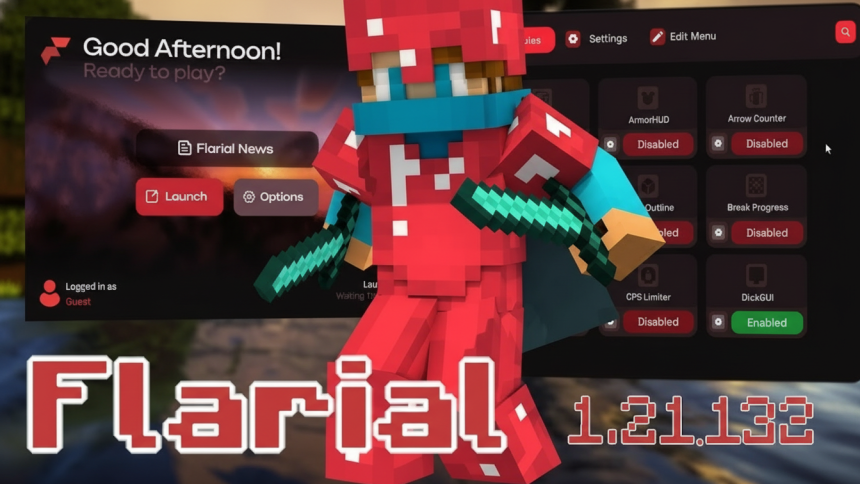
- Open the modules area to see all available options like FPS, CPS, ArmorHUD, Keystrokes, Zoom, etc.
- Click the red toggle buttons to enable/disable modules; click again to switch them off.
- Hover over a module to see a short description of what it does.
- Enter the HUD editor to reposition elements (gamer tags, keystrokes, counters) and adjust size/colors.
- Save your layout as a custom config so you can quickly swap setups for different game modes.
The devs even ran a config contest, highlighting how flexible the layout and module combination can be.
Recommended Settings for Tier 1 Players (US/UK/EU)
Tier 1 players typically have a mix of mid/high-end PCs and modern phones, often playing Hive, Cubecraft, Galaxite and similar servers. These settings are tuned for a balance of performance, clarity, and legit gameplay.
| Goal | Recommended Flarial Setup |
|---|---|
| Competitive PvP (Hive/Cubecraft) | Enable FPS, CPS, Keystrokes, Armor HUD, Zoom. Disable heavy motion blur, fun filters, and unnecessary overlays for a clean view. |
| Content Creation / Streaming | Use Keystrokes, CPS, FPS counters and a subtle motion blur. Keep text aligned to edges so it doesn’t block chat or crosshair. |
| Low-End Device Optimization | Turn off blur and non-essential particles, reduce HUD density, and use minimalistic fonts/colors for readability. |
| Practice & Aim Training | Enable reach/hit indicators, CPS, and smooth zoom to track spacing and crosshair discipline. |
Is Flarial Client Safe and Allowed on Servers?
Safety has two sides: security (malware risk) and server rules (ban risk).
Security & Source Trust
- Flarial is an open project hosted on GitHub, which allows public inspection of its code and binaries.
- Always download the launcher from the official GitHub organization or trusted creators who link to it.
- Avoid random file-sharing mirrors; they’re the main malware risk for modded clients.
Server Policies & “Legit” Usage
- Flarial is widely described as a legit Bedrock client, focusing on visual and QoL features instead of blatant hacks.
- Most large Bedrock servers primarily scan for obvious cheating, not for cosmetic FPS/HUD mods, but they always reserve the right to ban any 3rd‑party client.
- To minimise risk, keep combat mechanics vanilla and limit yourself to overlays, zoom, and HUD tweaks.
- If you play on ranked or prize-based ladders, check the server’s latest client modification policy before using Flarial.
Troubleshooting on Minecraft PE 1.21.132
Because 1.21.132 is a micro-update, you may run into minor compatibility issues until the Flarial team explicitly labels support for it. Here are practical fixes based on how the launcher works across 1.21.
- Client doesn’t inject: Ensure your launcher build is the latest. Try selecting a previous 1.21.x profile or enabling the beta DLL/injection option if available.
- HUD elements missing: Open the modules GUI and confirm the module is enabled, then check the HUD editor to see if it’s placed off-screen.
- Crashes after Mojang update: Temporarily disable Flarial and wait for a small patch; modded clients often require a quick update after each minor Bedrock build.
- World or progression issues: Tutorials note that Flarial’s GDK/launcher behavior is similar to a downgrader; changing versions can affect worlds or features if you’re not careful. Always back up worlds before switching version profiles.
Advanced Tips: Configs and V2 Features
If you want to push Flarial harder on 1.21.132, its config system and V2 features give you more control.
- Use community configs: You can import configs such as the contest-winning setup covered by creators, then tweak it to fit your own screen and DPI.
- Module-level customization: Many modules offer per-module settings (colors, size, animations) accessible through a gear icon or secondary menu.
- Beta DLL injection: Some V2 builds let you enable a beta DLL for cutting-edge features or better compatibility with brand-new versions.
- Per-server profiles: Maintain separate configs for casual SMP, SkyWars, and scrims, switching in seconds before queueing up.
For a visual walkthrough of using Flarial on Bedrock 1.21, you can watch this in-depth guide from a well-known creator:
YouTube Guide:
– Allianz Partners with Anthropic to Deploy AI Globally Across Insurance Operations
– ChatGPT Becomes Patients’ “Ally” for Decoding Bills, Spotting Overcharges, and Appealing Denials
– New Illinois AI Notice Law Takes Effect Jan. 1: Employers Must Disclose AI Use in Decisions
See more in our Sitemap.