
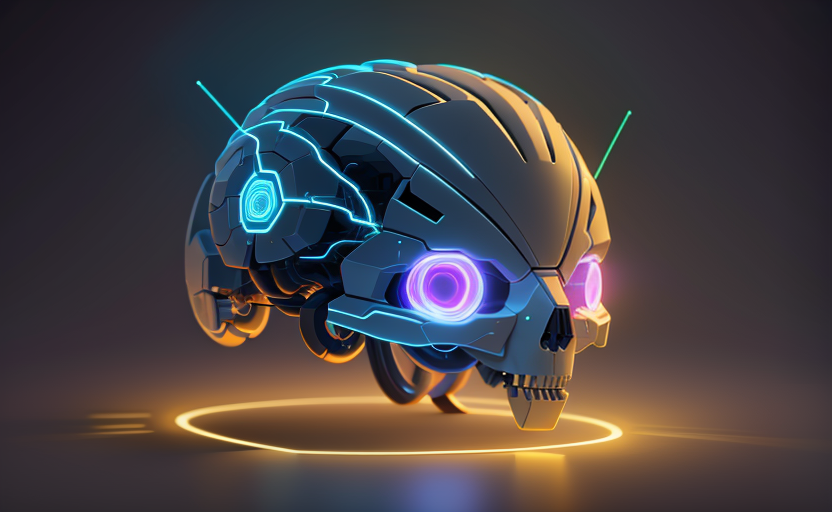
The Dawn of the Synthetic Creator Era
As of March 2026, the digital landscape has shifted fundamentally. We are no longer living in the age of the “influencer” as we knew it in 2020. We have entered the era of the AI Content Creator. This revolution isn’t just about automation; it is about the democratization of high-fidelity production. What once required a studio, a crew of five, and a week of post-production is now being generated in seconds on mobile devices.
The explosion of AI content creation is driven by the convergence of three critical technologies: hyper-realistic video generation, multi-modal LLMs (Large Language Models), and real-time neural rendering. For social media platforms like TikTok, Instagram, and the emerging decentralized networks of 2026, this has resulted in a volume of content that is both staggering and transformative.
1. The Video Revolution: From Prompt to Premiere
In 2026, video is the undisputed king of social media, but the way it is produced has changed. Early iterations of AI video were often criticized for “uncanny valley” effects or temporal inconsistency. Today, those hurdles have been cleared. Modern AI video tools allow creators to generate 4K, 60fps cinematic sequences from simple natural language descriptions.

The Rise of “Prompt Directors”
The role of the videographer has evolved into that of a Prompt Director. Instead of worrying about lighting rigs or lens apertures, creators are focusing on narrative architecture. Tools can now maintain character consistency across different scenes, allowing solo creators to produce serialized animated shows or “live-action” dramas without ever picking up a camera.
- Temporal Stability: AI models now understand physics, ensuring that objects move naturally and lighting remains consistent across frames.
- Voice Synthesis: Using neural cloning, creators can generate voiceovers in any language, with perfect emotional inflection, matching the lip-sync of generated characters perfectly.
- B-Roll Generation: Content creators use AI to fill gaps in their storytelling, generating specific historical reenactments or futuristic landscapes that would be impossible to film.
2. Multi-Modal Content Engines: One Idea, Infinite Formats
One of the most significant trends in March 2026 is the atomization of content. A single core idea—perhaps a 50-word concept—can now be expanded into a comprehensive multi-platform campaign in minutes. This is the “Content Multiplier” effect.
An AI content creator starts with a premise. The AI engine then branches this out into:
- A 10-minute deep-dive video for YouTube.
- Six 30-second vertical clips for social feeds.
- A series of high-resolution photorealistic images for visual platforms.
- A 2,000-word educational blog post.
- An interactive poll or quiz to drive engagement.
This efficiency allows creators to maintain a presence across all digital touchpoints without the burnout that plagued the previous generation of human influencers.

3. The Impact on Social Media Algorithms
Social media platforms have had to rewrite their algorithms to handle the sheer volume of AI-generated content. In 2026, the “Follow” model has largely been replaced by “Interest-Graph” models that prioritize the quality of the content over the identity of the creator. Since AI can produce “perfect” content tailored to specific niche interests, we are seeing the rise of Hyper-Niche Communities.
Example: A creator might use AI to run a channel dedicated entirely to “Alternative History Architecture,” featuring high-definition videos of buildings that were never built. Before AI, the cost of producing such visuals would have been prohibitive. Now, it attracts millions of specialized viewers.
4. The Authenticity Paradox
With the explosion of synthetic media, a new question has emerged: What is “real”? Surprisingly, the trend in 2026 isn’t a rejection of AI, but a new definition of authenticity. Audiences are moving toward “Human-in-the-Loop” (HITL) content. They value the curation and the unique perspective of the human behind the AI prompts.
Transparency labels have become standard. Most platforms now use cryptographic watermarking (like C2PA) to identify AI-generated segments. Rather than hurting views, these labels often act as a badge of technical skill, as audiences appreciate the “prompt engineering” required to achieve high-end results.
The “Human Touch” Premium
As AI content becomes the baseline, raw, unedited human content has become a “luxury good.” We are seeing a resurgence in “Lo-Fi” content—shaky camera work, authentic stutters, and unpolished environments—as a way for creators to prove their biological humanity. The most successful creators in 2026 are those who masterfully blend high-end AI production with moments of raw human connection.
5. Economic Shifts in the Creator Economy
The barrier to entry for content creation has hit zero. This has led to a massive shift in how creators monetize their work. Traditional ad-revenue sharing is no longer enough because the supply of content is virtually infinite. Instead, creators are focusing on:

- Customization: AI allows creators to offer personalized content to their fans. A fan can pay for a personalized video message where the AI-generated version of the creator addresses them by name and references their specific interests.
- IP Licensing: Creators are “renting out” their digital likenesses and voice models to brands, allowing for thousands of localized ads to be generated simultaneously.
- Community Tokens: Using blockchain integration to gate-keep exclusive AI-generated experiences or collaborative “world-building” projects.
6. Ethical Considerations and the Deepfake Dilemma
We cannot discuss the AI content explosion without addressing the darker side of the revolution. In 2026, the battle against misinformation is constant. The ease with which one can create a convincing video of a public figure has necessitated “Identity Verification” badges that are much more rigorous than the blue checks of the past.
Educational content creators are leading the charge in teaching Digital Literacy. Understanding how to spot AI-generated artifacts—though they are becoming rarer—is a critical skill for the modern consumer. The industry has largely moved toward a “Consent-Based” model for AI training, where creators are compensated if their style or likeness is used to train new models.
7. Essential Tools for the 2026 Creator
To stay competitive in this fast-moving market, creators are utilizing a new stack of tools. These aren’t just editors; they are creative partners.
Generative Environments: Tools that allow creators to build 3D worlds via voice, which then serve as the “set” for their AI-generated avatars. This replaces green screens and expensive location shoots.
Sentiment-Driven Analytics: AI tools that don’t just count views, but analyze the emotional response of the audience in the comments and adjust the next piece of content’s “emotional arc” accordingly.

Neural Style Transfer: The ability to take a video filmed on a smartphone and instantly apply the visual style of a 1970s film noir or a futuristic cyberpunk aesthetic with perfect consistency.
8. Conclusion: The Future of Creativity
The “AI Content Creator” is not a replacement for human creativity; it is an amplification of it. By March 2026, we have learned that the machine provides the “how,” but the human still provides the “why.” The revolution has moved us away from the mechanical labor of editing and toward the intellectual labor of storytelling.
As we look toward the rest of the decade, the explosion of AI content will only accelerate. The creators who thrive will be those who embrace these tools to tell stories that were previously impossible to visualize, reaching audiences in ways we are only beginning to understand. The social media revolution is here, and it is powered by silicon, but guided by the human heart.
