How to Have Downloads Start Automatically in Chrome and Manage Download Settings
If you want Chrome to download files without asking where to save each one, turn off “Ask where to save each file before downloading”. Chrome will then save files in its default Downloads folder or another folder you choose. This guide explains the setting on Windows, macOS and Linux, plus automatic-download permissions, PDF behaviour, Android and iPhone instructions, security checks and troubleshooting.
Key Takeaways
- Disable Chrome’s save-location prompt to start ordinary downloads automatically.
- Choose a specific folder under Settings > Downloads > Location.
- “Automatic downloads” permission controls websites that request several files—not every normal download.
- Chrome may block dangerous or suspicious files using Safe Browsing.
- Android and iPhone versions offer fewer location controls than desktop Chrome.
- You can pause, cancel, find, move and remove downloads from Chrome’s Downloads page.
The quickest way to have downloads save automatically

On a computer:
- Open Chrome.
- Select the three-dot menu (⋮) in the upper-right corner.
- Select Settings.
- Open Downloads.
- Turn off Ask where to save each file before downloading.
- Under Location, select Change if you want a different folder.
After this, clicking a legitimate download link normally starts the download immediately. Files are saved to the selected location without a Save As window.
You can also open the settings page directly by entering:
chrome://settings/downloadsGoogle’s official Chrome download instructions describe the same controls and default folders.
Change Chrome’s default download folder
A separate folder can make downloaded documents easier to organise. For example, you could create Documents\College PDFs, Work Downloads or a folder on another drive.
- Go to ⋮ > Settings > Downloads.
- Next to Location, click Change.
- Select or create the destination folder.
- Click Select Folder (the wording can vary slightly by operating system).
Chrome’s usual locations, if you have not changed them, are:
| Platform | Typical default location |
|---|---|
| Windows 10 and later | C:\Users\<username>\Downloads |
| macOS | /Users/<username>/Downloads |
| Linux | /home/<username>/Downloads |
Changing Chrome’s folder does not move files that were already downloaded. Move older files separately using File Explorer, Finder or your Linux file manager.
When to enable “Ask where to save”
Turn the prompt on when you regularly download files to different project folders, use a shared computer or want to review every file before it is saved.
- Open
chrome://settings/downloads. - Enable Ask where to save each file before downloading.
- Choose a folder whenever a download begins.
This is a save-location choice, not a security bypass. Chrome can still warn about or block unsafe files.
Allow or block automatic downloads from websites
Chrome has another setting called Automatic downloads. It deals mainly with a website attempting to download multiple files automatically after the first file—for example, a site offering a batch of PDFs or images.
On desktop Chrome:
- Select ⋮ > Settings.
- Open Privacy and security > Site settings.
- Select Additional permissions > Automatic downloads.
- Choose one of the available options:
- Allow sites to download multiple files automatically.
- Ask when a site tries to download multiple files automatically (recommended).
- Do not allow sites to download multiple files automatically.
You can change permission for a particular website without changing the global rule:
- Open the website.
- Click the padlock or site-controls icon beside the address bar.
- Open Site settings.
- Find Automatic downloads.
- Select Allow, Ask (default) or Block.
Allow this only for a website you trust. A compromised or deceptive site could otherwise place many unwanted files in your Downloads folder.
Why one file downloads but the next one is blocked
Chrome may allow the first file and ask for permission before a page starts additional downloads. This is intentional: it limits drive-by downloads and reduces the chance that a malicious page fills your device with files.
If a trusted portal needs several downloads, approve the site temporarily, download the required files, then restore the permission to Ask or Block.
Manage PDF downloads and automatic opening
PDFs can either open in Chrome’s built-in viewer or download directly.
To choose the behaviour:
- Open Settings.
- Select Privacy and security > Site settings.
- Open Additional content settings > PDF documents.
- Choose whether PDFs open in Chrome or download to your device.
If a file opens automatically after downloading, Chrome may have remembered Always open files of this type.
To undo that choice:
- Download the file again, or open Chrome’s recent download list.
- Open the download’s menu.
- Clear Always open files of this type if it is selected.
This is useful for PDFs, ZIP archives and other file types that you prefer to inspect before opening.
Download files safely
Automatic saving is convenient, but it does not prove that a file is safe. Use these checks before opening a download:
- Prefer the software developer’s official website, Google Play or the Apple App Store.
- Check the domain name carefully; fake download pages often imitate popular brands.
- Avoid “cracked” applications, modified APKs and unauthorised game installers. They may contain malware, unwanted ads or copyright-infringing content.
- Do not disable Chrome’s security warnings just to force a download.
- Treat
.exe,.msi,.bat,.cmd,.scr,.apkand macro-enabled Office files with extra caution. - Scan unexpected files with your installed security software and confirm the sender or website.
- Keep Chrome and your operating system updated.
Google states that Chrome automatically blocks some dangerous downloads and uses Safe Browsing warnings. If Chrome identifies a file as suspicious, do not select Keep unless you understand the risk and have independently confirmed the source. See Google’s guidance on blocked downloads.
How to download automatically on Android
Android Chrome’s menus and available options can vary by device, Android version and Chrome release. In many current installations, downloads go directly to the device’s Download folder, while the desktop-style “ask where to save each file” option may not be available.
To download a file:
- Open Chrome and visit the page containing the file.
- Tap the file link or touch and hold it.
- Choose Download link or the equivalent download option.
- Open ⋮ > Downloads in Chrome to view progress and downloaded items.
- Use the Files or file-manager app to move the file into another folder.
For a website that attempts multiple automatic downloads, look for ⋮ > Settings > Site settings > Automatic downloads. If that option is not shown, the website may still request permission through a prompt, or your device’s Chrome build may provide limited controls.
If you cannot find a downloaded file, search the Files app for the filename and check its Downloads category. Also verify that your phone has free storage and that Chrome has the required file-access permissions.
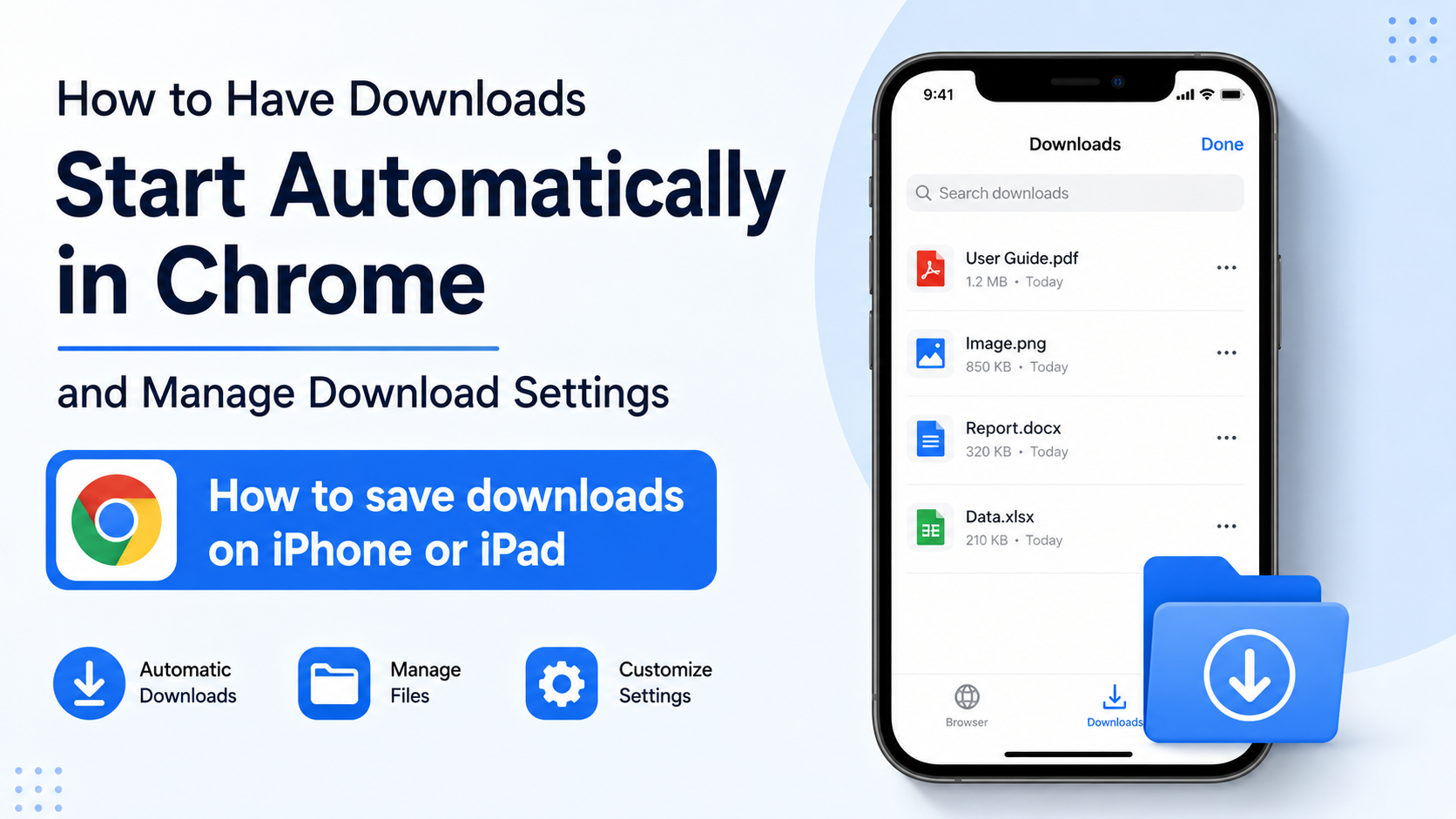
How to save downloads on iPhone or iPad
Chrome on iOS uses Apple’s Files system for many downloads. It does not provide the same desktop download-folder controls.
- Open Chrome and visit the file’s webpage.
- Tap the file.
- Tap Save….
- On the “Save in…” screen, choose Files, iCloud Drive or another available location.
- Tap Save.
If Save… does not appear, tap the Share icon and choose Save to Files. You can also save directly to Google Drive when that option is available. To find downloads later, select ⋮ > Downloads in Chrome or open the Files app. Google provides platform-specific details in its Chrome iPhone and iPad download guide.
Find, pause or remove downloaded files
On a computer, open ⋮ > Downloads, or press:
- Windows/Linux:
Ctrl + J - macOS:
Command + Option + L
From the Downloads page you can:
- Click a filename to open it.
- Select Show in folder to locate it on the computer.
- Pause, resume or cancel an active download.
- Remove an item from Chrome’s download history.
Removing an entry from Chrome’s Downloads page does not delete the actual file from your computer. Delete the file separately from the destination folder.
Troubleshooting Chrome downloads
Chrome does nothing when you click Download
Check whether the website requires a login, blocks pop-ups or uses a button that is not a real file link. Try right-clicking the link and selecting Save link as. If the site is unfamiliar, do not bypass a security warning.
The file is saved but cannot be found
Open chrome://settings/downloads and confirm the current Location. Then check the Downloads page and search the destination folder by filename. Cloud-sync folders, external drives and workplace policies can also redirect downloads.
Chrome says “Disk full”
Free space on the drive or phone, empty the Recycle Bin/Trash, and remove old installers or videos. If the destination is an SD card or external drive, reconnect it and confirm that it is writable.
A download is blocked
Read the warning carefully. Confirm the file’s source through the developer’s official website. Never turn off Safe Browsing permanently to obtain an unverified file.
The Save As prompt keeps appearing
Enable the automatic-save behaviour by turning off Ask where to save each file before downloading. If the setting changes back, Chrome may be managed by an employer, school or family account. A browser extension can also interfere; test in Incognito mode with extensions disabled.
Frequently Asked Questions
What does “how to have download” mean in Chrome?
Usually, it means making Chrome download files automatically without asking for a save location. Turn off Ask where to save each file before downloading in Settings > Downloads.
Does automatic download allow every file from every website?
No. The save-location setting affects normal downloads. Chrome can still block dangerous files, and websites downloading multiple files may require separate Automatic downloads permission.
Can I set Chrome to download directly to my desktop?
Yes, on Windows, macOS and Linux. Open Settings > Downloads > Location > Change, then select the Desktop folder. Use this carefully because the desktop can become cluttered quickly.
How do I make Chrome download PDFs instead of opening them?
Open Settings > Privacy and security > Site settings > Additional content settings > PDF documents, then select the option to download PDFs rather than open them in Chrome.
Can I choose a different folder for every Android Chrome download?
Availability varies by device and Chrome version. If an “ask where to save” option is missing, download the file to the default Download folder and move it using the Files app.
Why does Chrome ask permission for several files?
Chrome treats repeated downloads from one page as a potential security risk. Set that website’s Automatic downloads permission to Allow only when you trust the site and expect the files.
How do I stop Chrome from opening a file after downloading?
Open Chrome’s recent download list, open the file’s menu and clear Always open files of this type. You can also change PDF behaviour under Chrome’s PDF documents settings.
Are files downloaded through Chrome automatically safe?
No. Chrome’s warnings reduce risk but cannot guarantee safety. Use official sources, keep security software updated and inspect unexpected installers or APKs before opening them.